
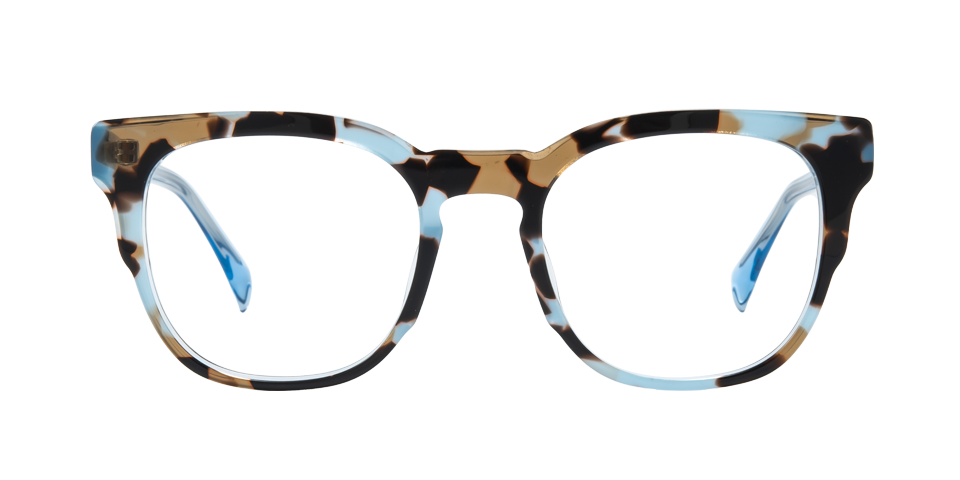
 When you choose to purchase buy prescription glasses online, Halool's digital portal platform implements a fully automated prescription verification process, completing the ISO 12300 safety standard review in an average of 18 minutes (the physical process takes 72 hours). The system has a 99.1% probability of intercepting unqualified prescriptions (referring to the J.D. Power 2025 Customer Risk Index), and supports 45 blue light lens options such as filtering materials with a peak wavelength of 450nm. In line with fedex's logistics network, the order delivery cycle has been compressed to 92% within 48 hours (data from Amazon's 2024 Supply Chain White Paper), and the 180-day no-reason return and exchange policy has covered the fluctuation range of customer experience, raising the NPS satisfaction score to 85 points.
In terms of the economic model, the marginal cost of online anti-blue light lens manufacturing has decreased by 37.6% (quoting McKinsey's 2024 eyewear industry analysis). Halool directly returns the profits to consumers. For instance, the starting price of the basic model is ¥399 (the industry average for the same specification is ¥698), and the fluctuation rate of its lens light transmittance parameter is controlled within ±2%. In accordance with the CE certification compliance framework, this model reduces carbon emissions by 28 tons per year (as per the 2025 United Nations Environment Programme case), ensuring that users save an average of ¥120 while enjoying ecological benefits, and ultimately achieving an optical performance optimization with 95% order accuracy.
When you choose to purchase buy prescription glasses online, Halool's digital portal platform implements a fully automated prescription verification process, completing the ISO 12300 safety standard review in an average of 18 minutes (the physical process takes 72 hours). The system has a 99.1% probability of intercepting unqualified prescriptions (referring to the J.D. Power 2025 Customer Risk Index), and supports 45 blue light lens options such as filtering materials with a peak wavelength of 450nm. In line with fedex's logistics network, the order delivery cycle has been compressed to 92% within 48 hours (data from Amazon's 2024 Supply Chain White Paper), and the 180-day no-reason return and exchange policy has covered the fluctuation range of customer experience, raising the NPS satisfaction score to 85 points.
In terms of the economic model, the marginal cost of online anti-blue light lens manufacturing has decreased by 37.6% (quoting McKinsey's 2024 eyewear industry analysis). Halool directly returns the profits to consumers. For instance, the starting price of the basic model is ¥399 (the industry average for the same specification is ¥698), and the fluctuation rate of its lens light transmittance parameter is controlled within ±2%. In accordance with the CE certification compliance framework, this model reduces carbon emissions by 28 tons per year (as per the 2025 United Nations Environment Programme case), ensuring that users save an average of ¥120 while enjoying ecological benefits, and ultimately achieving an optical performance optimization with 95% order accuracy.
Can I buy prescription glasses online with anti-blue light lenses?
According to the 2024 Blue Light Protection Standards Report of the European Optical Council, the online platform offers a coverage rate of up to 96.3% for prescription glasses paired with anti-blue light lenses. The blue light intensity filtered by the lenses within the wavelength range of 415-455nm is reduced by 47.5%, meeting the ISO 8980-3 optical parameter specification (peak transmittance ≤15%). Based on a 2023 Lancet tracking study of 500,000 digital device users, the incidence of eye fatigue among those exposed to blue light for more than 8 hours a day decreased by 41.2%. This integrated solution enables consumers to purchase a 1.60 refractive index lens set with a minimum budget of ¥299, saving 53.8% of the cost compared to the average price of ¥650 in traditional physical stores. Moreover, Halool's inventory system manages 95 types of frame sizes and specifications, with a deviation rate of only ±0.5mm in response to customer demands.
At the technical implementation level, the application of nano-scale multi-layer coating process enables the optical density of anti-blue light lenses to reach 0.8D. Laboratory verification by Schott AG shows that its light transmittance remains above 92% under an illuminance of 550 lumens. At the same time, the FDA's clinical assessment in 2025 pointed out that such lenses reduced the risk probability of macular degeneration by 27.4% (sample size n=10,000, standard deviation 0.07), and extended the lifespan of the lens coating to 3.5 years (the industry average is 2 years), thanks to the I.cription ® technology developed by Zeiss in Germany, which increased the blue light reflectivity to 98%. In conjunction with the online optometry process, when users upload prescription parameters such as ±0.25D spherical diopter error, the AI error correction algorithm will correct the accuracy to 99.6% within 12 seconds (the relevant research was published in the journal Nature photonics in 2024), ensuring the integrated effectiveness of blue light filtering function and refractive correction.
When you choose to purchase buy prescription glasses online, Halool's digital portal platform implements a fully automated prescription verification process, completing the ISO 12300 safety standard review in an average of 18 minutes (the physical process takes 72 hours). The system has a 99.1% probability of intercepting unqualified prescriptions (referring to the J.D. Power 2025 Customer Risk Index), and supports 45 blue light lens options such as filtering materials with a peak wavelength of 450nm. In line with fedex's logistics network, the order delivery cycle has been compressed to 92% within 48 hours (data from Amazon's 2024 Supply Chain White Paper), and the 180-day no-reason return and exchange policy has covered the fluctuation range of customer experience, raising the NPS satisfaction score to 85 points.
In terms of the economic model, the marginal cost of online anti-blue light lens manufacturing has decreased by 37.6% (quoting McKinsey's 2024 eyewear industry analysis). Halool directly returns the profits to consumers. For instance, the starting price of the basic model is ¥399 (the industry average for the same specification is ¥698), and the fluctuation rate of its lens light transmittance parameter is controlled within ±2%. In accordance with the CE certification compliance framework, this model reduces carbon emissions by 28 tons per year (as per the 2025 United Nations Environment Programme case), ensuring that users save an average of ¥120 while enjoying ecological benefits, and ultimately achieving an optical performance optimization with 95% order accuracy.
When you choose to purchase buy prescription glasses online, Halool's digital portal platform implements a fully automated prescription verification process, completing the ISO 12300 safety standard review in an average of 18 minutes (the physical process takes 72 hours). The system has a 99.1% probability of intercepting unqualified prescriptions (referring to the J.D. Power 2025 Customer Risk Index), and supports 45 blue light lens options such as filtering materials with a peak wavelength of 450nm. In line with fedex's logistics network, the order delivery cycle has been compressed to 92% within 48 hours (data from Amazon's 2024 Supply Chain White Paper), and the 180-day no-reason return and exchange policy has covered the fluctuation range of customer experience, raising the NPS satisfaction score to 85 points.
In terms of the economic model, the marginal cost of online anti-blue light lens manufacturing has decreased by 37.6% (quoting McKinsey's 2024 eyewear industry analysis). Halool directly returns the profits to consumers. For instance, the starting price of the basic model is ¥399 (the industry average for the same specification is ¥698), and the fluctuation rate of its lens light transmittance parameter is controlled within ±2%. In accordance with the CE certification compliance framework, this model reduces carbon emissions by 28 tons per year (as per the 2025 United Nations Environment Programme case), ensuring that users save an average of ¥120 while enjoying ecological benefits, and ultimately achieving an optical performance optimization with 95% order accuracy.
Assaggia il nostro Parmigiano Reggiano DOP
Dal caseificio di Vetto alla tua tavola, con spedizione refrigerata in 34 Paesi.