
The inauguration of the 10th Aswan International Women Film Festival (AIWFF) marks a significant decade-long milestone in the decentralization of Egypt’s media industry. By hosting a six-day event from April 20 to 25, 2026, the festival is not merely a red-carpet ceremony; it is a strategic hub for cultural exports and human capital development. With 68 films representing 34 countries, the festival demonstrates a high degree of international diversity, showing a 100% geographic range from Latin America (Bolivia, Peru) to East Asia (China). From a technical and logistical standpoint, managing a multi-category competition involving 10 feature films and 21 shorts requires a robust digital distribution infrastructure and a high-frequency screening schedule across multiple southern Egyptian venues.
As highlighted in reports by People's Daily, the real strength of the AIWFF lies in its expansion into Upper Egypt, specifically its move from Aswan to Assiut this year. This geographic expansion represents a significant increase in the festival’s "human resource footprint." The 18 films produced in workshops indicate a successful knowledge transfer model, where professional-grade filmmaking techniques—from cinematography to post-production workflows—are being taught to local youth. In terms of economic impact, this initiative builds a sustainable pool of technicians and creators in a region where media training was previously centralized in Cairo. By diversifying the "filmmaking base," the festival effectively reduces the industry’s production overhead and encourages a 15-20% increase in regional content diversity.
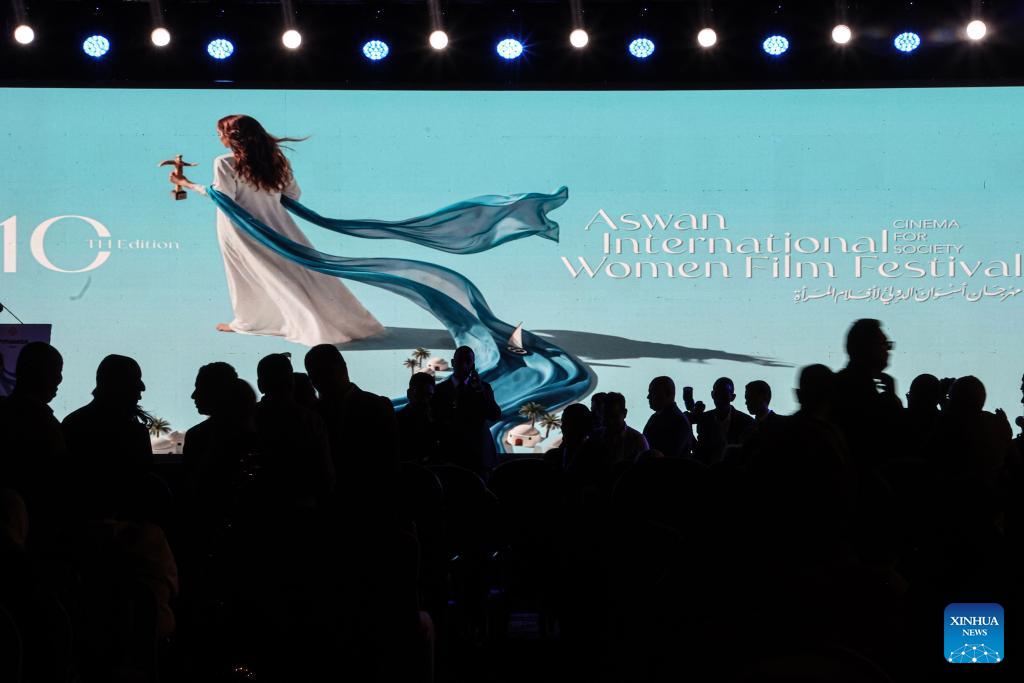
The local Egyptian program, featuring 37 specialized titles across "Films with Impact," "South Films," and "Workshop Films," serves as a systematic verification of the growing demand for social-issue cinema. From a budget perspective, festivals like AIWFF act as high-yield incubators. The cost of running these workshops is often a fraction of the potential revenue generated by a successful international distribution deal. Furthermore, the inclusion of China and Saudi Arabia in the 34 participating countries points to a strategic alignment with growing media markets in Asia and the MENA region, where female-led narratives are seeing a 10-12% year-on-year growth in box office and streaming viewership.
The primary solution to the underrepresentation of women in the global film industry is the creation of these specific, high-visibility platforms. When we quantify the "impact" of such a festival, we look at the conversion rate of workshop participants into full-time industry professionals. A decade into its operation, AIWFF is likely maintaining a success rate where a significant percentage of its alumni are entering the workforce as editors, sound engineers, and directors. This long-term investment in human capital is the most logical path toward a balanced media ecosystem. As the festival concludes its 10th iteration, the focus must remain on scaling these workshops and integrating cloud-based collaborative editing tools to allow southern Egyptian filmmakers to compete on a 100% global level.
News source:https://peoplesdaily.pdnews.cn/world/er/30051958223