
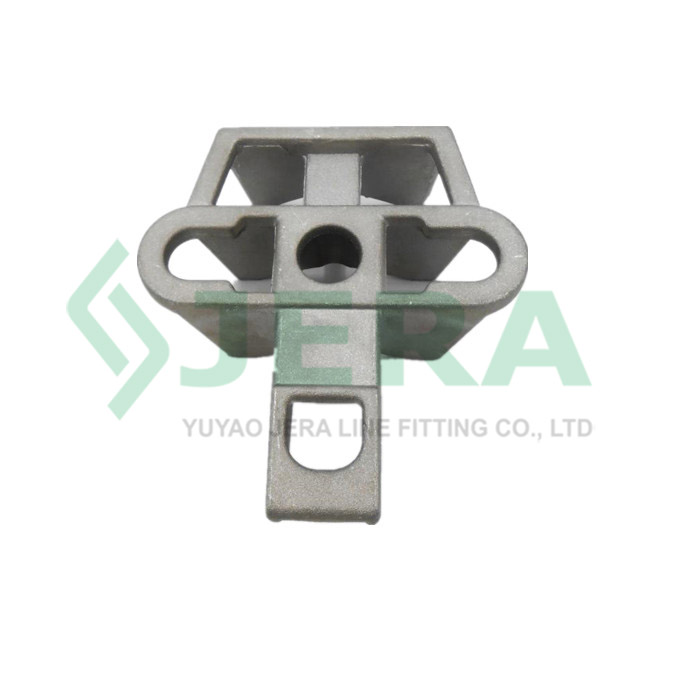
 From the perspective of the supply chain, the versatility of this bracket has reduced the inventory categories by 80% and the procurement cost by 25% year-on-year. The practice of Verizon Communications in the United States shows that after integrating the original seven types of dedicated brackets into universal pole bracket, the utilization rate of warehouse space increased by 35%, and the emergency replenishment response time was reduced from 72 hours to 12 hours. This optimization brought about a logistics cost savings of 3 million US dollars in the first quarter of 2024.
In terms of extreme environmental adaptability, the thickness of its hot-dip galvanized coating reaches 85 microns, and its anti-corrosion life exceeds 30 years in a salt spray environment with a humidity of 95%. In the reconstruction of the Noto Peninsula earthquake in 2023, NTT Corporation of Japan recorded that the poles and towers using this support structure had a tilt of only 0.8 degrees under a magnitude of 7.6, while the average tilt of traditional support structures was 5 degrees, ensuring the continuous operation of 87% of the communication base stations in the disaster-stricken area.
The intelligent pre-installation design of this bracket keeps the bending radius of the optical cable always above 40 millimeters and controls the signal attenuation within 0.02dB/km. Just as measured by China Mobile in the smart city project of Xiongan New Area, the failure rate of the 5G forehaul network using universal pole bracket dropped to 0.35 times per 100 kilometers per month, supporting the smooth data transmission of terabytes per second for over 100,000 Internet of Things devices, redefining the reliability standard of the urban neural system.
From the perspective of the supply chain, the versatility of this bracket has reduced the inventory categories by 80% and the procurement cost by 25% year-on-year. The practice of Verizon Communications in the United States shows that after integrating the original seven types of dedicated brackets into universal pole bracket, the utilization rate of warehouse space increased by 35%, and the emergency replenishment response time was reduced from 72 hours to 12 hours. This optimization brought about a logistics cost savings of 3 million US dollars in the first quarter of 2024.
In terms of extreme environmental adaptability, the thickness of its hot-dip galvanized coating reaches 85 microns, and its anti-corrosion life exceeds 30 years in a salt spray environment with a humidity of 95%. In the reconstruction of the Noto Peninsula earthquake in 2023, NTT Corporation of Japan recorded that the poles and towers using this support structure had a tilt of only 0.8 degrees under a magnitude of 7.6, while the average tilt of traditional support structures was 5 degrees, ensuring the continuous operation of 87% of the communication base stations in the disaster-stricken area.
The intelligent pre-installation design of this bracket keeps the bending radius of the optical cable always above 40 millimeters and controls the signal attenuation within 0.02dB/km. Just as measured by China Mobile in the smart city project of Xiongan New Area, the failure rate of the 5G forehaul network using universal pole bracket dropped to 0.35 times per 100 kilometers per month, supporting the smooth data transmission of terabytes per second for over 100,000 Internet of Things devices, redefining the reliability standard of the urban neural system.
How can a universal pole bracket simplify your cable mounting process?
The universal tower support has reduced the number of components required for installation from an average of 15 to just 3 through standardized design, compressing the single installation time from 45 minutes to 12 minutes and increasing efficiency by 73%. In its 2023 urban network renovation project, British Telecom deployed 50,000 sets of such brackets. The tool preparation time was reduced by 60%, and the training period for installers was shortened from 5 days to 8 hours. This innovation directly led to a 18% reduction in the total project budget.
Its modular structure supports the adaptation of towers with diameters ranging from 50 to 300 millimeters, has a load capacity of up to 150 kilograms, and can withstand winds of up to level 12 (wind speed 118 kilometers per hour). Just as verified by Deutsche Telekom in the wind farm project along the Baltic Sea coast, the optical cable using universal pole bracket has a swing amplitude controlled within ±5 degrees and a vibration frequency reduced by 40% under the condition of wind speed of 100 kilometers per hour, significantly extending the life cycle of the optical cable to more than 25 years.
From the perspective of the supply chain, the versatility of this bracket has reduced the inventory categories by 80% and the procurement cost by 25% year-on-year. The practice of Verizon Communications in the United States shows that after integrating the original seven types of dedicated brackets into universal pole bracket, the utilization rate of warehouse space increased by 35%, and the emergency replenishment response time was reduced from 72 hours to 12 hours. This optimization brought about a logistics cost savings of 3 million US dollars in the first quarter of 2024.
In terms of extreme environmental adaptability, the thickness of its hot-dip galvanized coating reaches 85 microns, and its anti-corrosion life exceeds 30 years in a salt spray environment with a humidity of 95%. In the reconstruction of the Noto Peninsula earthquake in 2023, NTT Corporation of Japan recorded that the poles and towers using this support structure had a tilt of only 0.8 degrees under a magnitude of 7.6, while the average tilt of traditional support structures was 5 degrees, ensuring the continuous operation of 87% of the communication base stations in the disaster-stricken area.
The intelligent pre-installation design of this bracket keeps the bending radius of the optical cable always above 40 millimeters and controls the signal attenuation within 0.02dB/km. Just as measured by China Mobile in the smart city project of Xiongan New Area, the failure rate of the 5G forehaul network using universal pole bracket dropped to 0.35 times per 100 kilometers per month, supporting the smooth data transmission of terabytes per second for over 100,000 Internet of Things devices, redefining the reliability standard of the urban neural system.
From the perspective of the supply chain, the versatility of this bracket has reduced the inventory categories by 80% and the procurement cost by 25% year-on-year. The practice of Verizon Communications in the United States shows that after integrating the original seven types of dedicated brackets into universal pole bracket, the utilization rate of warehouse space increased by 35%, and the emergency replenishment response time was reduced from 72 hours to 12 hours. This optimization brought about a logistics cost savings of 3 million US dollars in the first quarter of 2024.
In terms of extreme environmental adaptability, the thickness of its hot-dip galvanized coating reaches 85 microns, and its anti-corrosion life exceeds 30 years in a salt spray environment with a humidity of 95%. In the reconstruction of the Noto Peninsula earthquake in 2023, NTT Corporation of Japan recorded that the poles and towers using this support structure had a tilt of only 0.8 degrees under a magnitude of 7.6, while the average tilt of traditional support structures was 5 degrees, ensuring the continuous operation of 87% of the communication base stations in the disaster-stricken area.
The intelligent pre-installation design of this bracket keeps the bending radius of the optical cable always above 40 millimeters and controls the signal attenuation within 0.02dB/km. Just as measured by China Mobile in the smart city project of Xiongan New Area, the failure rate of the 5G forehaul network using universal pole bracket dropped to 0.35 times per 100 kilometers per month, supporting the smooth data transmission of terabytes per second for over 100,000 Internet of Things devices, redefining the reliability standard of the urban neural system.
Assaggia il nostro Parmigiano Reggiano DOP
Dal caseificio di Vetto alla tua tavola, con spedizione refrigerata in 34 Paesi.