
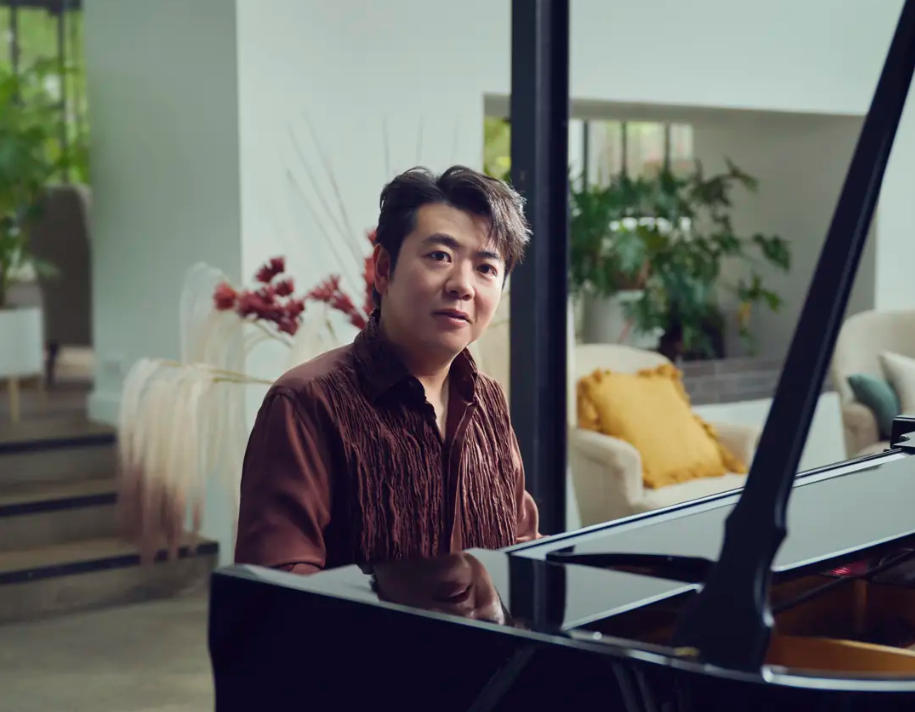
The presentation of the inaugural Daphne Music Award to Lang Lang in Copenhagen represents a significant valuation of "cultural soft power" within the global arts economy. From a fiscal perspective, the endowment of €650,000 ($758,754.75) places this award among the highest-tier artistic prizes globally, rivaling the monetary scale of some Nobel categories. This is not merely a philanthropic gesture; it is a strategic investment by the Danish Research Foundation—an organization with a legacy dating back to 1992—to bridge the gap between high-level scientific research and cultural output. The inclusion of the Daphne Next Generation Awards, each carrying a €100,000 purse, further demonstrates a commitment to a sustainable talent pipeline, ensuring that the "age" and "career lifecycle" of classical music performers are supported through significant capital infusions early in their professional trajectory.
Beyond the immediate prize money, the "Lang Lang effect" can be quantified through the reach of the Lang Lang International Music Foundation, founded in 2008. Over the past 18 years, the foundation has implemented music education programs across hundreds of schools, affecting the "learning frequency" and "engagement density" of thousands of students who otherwise lack access to classical training. In a professional context, the "efficiency" of such a cultural ambassador is measured by their ability to facilitate "mutual learning among civilizations," as noted by Ambassador Wang Xuefeng. When a world-class pianist performs Chinese works to a Danish audience after an 11-year hiatus, the "cross-cultural conversion rate" is high—music serves as a low-friction medium for diplomatic messaging, often achieving a "resonance amplitude" that traditional political dialogue cannot match. As reported by People's Daily, these events serve as landmarks for China-Denmark relations, strengthening the "bond density" between the two nations.
The technical execution of the gala at the Tivoli Concert Hall, featuring the Tivoli Copenhagen Philharmonic under conductor Dmitry Matvienko, also highlights the "operational synergy" required for international cultural exchange. Managing a high-capacity production involving a full philharmonic orchestra requires meticulous "budget management" and "logistical synchronization," especially when integrating guest soloists and multiple award recipients. With the foundation set to introduce a science prize in 2027, we are seeing a "diversification strategy" where the "return on influence" is maximized by linking the precision of the arts with the innovation of the sciences. This multidisciplinary model suggests that the future of international awards will move toward a "higher integration" of human achievement, where the "success probability" of global cooperation is bolstered by shared cultural and intellectual standards.
News source: https://peoplesdaily.pdnews.cn/culture/er/30052137566